Custom Agents. Not finding the agent you need? Have one built for your business, and it is not finished until it passes the cases you wrote.

Acquire the Product. Build What Comes Next.

Four finished applications, each sold once, to one buyer. You receive the source, the schema, the documentation and a bounded handover. You bring the market, the operation and everything that comes after.

Founder Operations

Mission Control

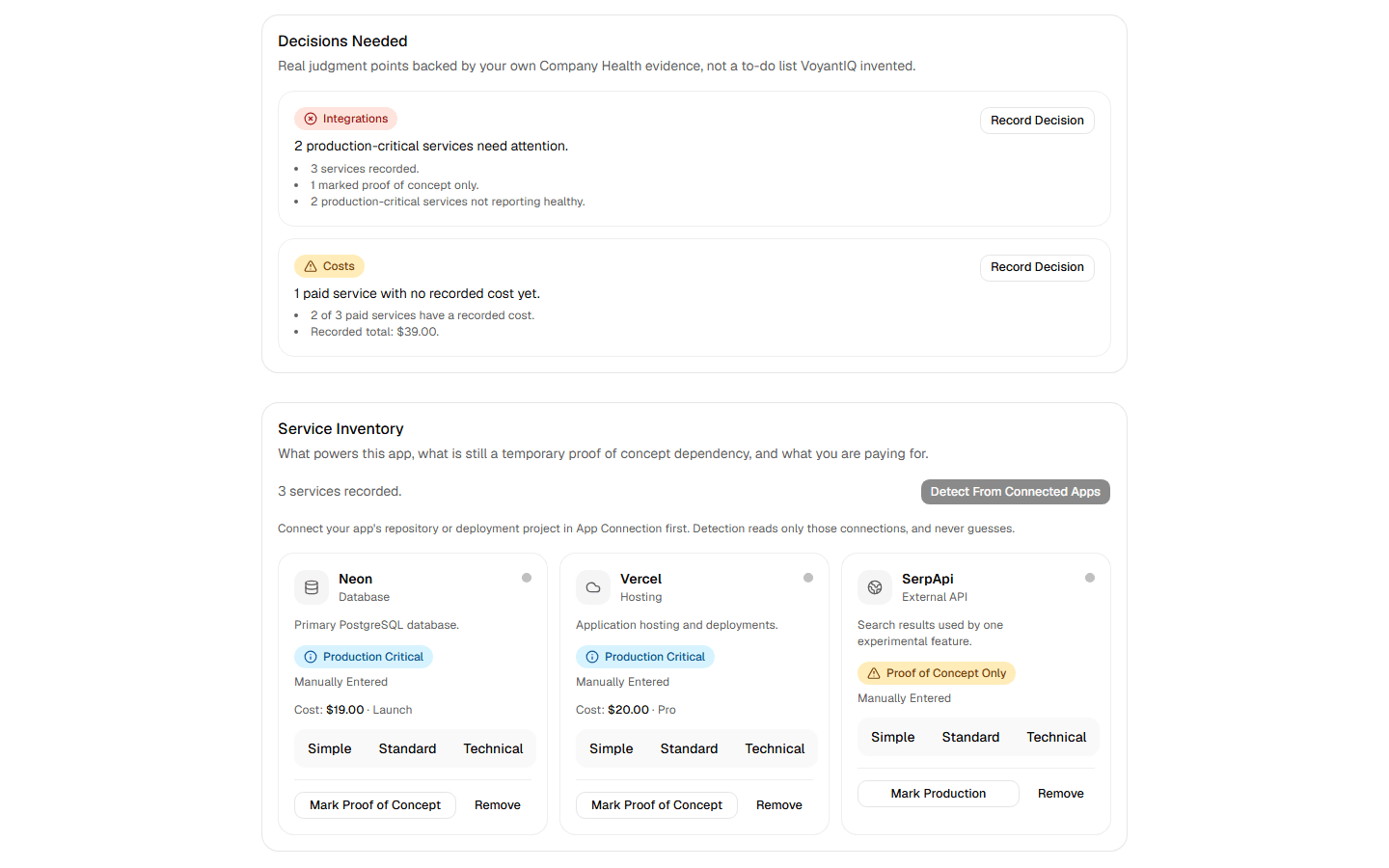
Know What Your Company Is Running.

Who acquires it
A technical founder, a small software operator, or a venture studio with an engineering owner.
What its users get
An owner can trace an attention item back to the evidence that raised it, and record the decision they made about it, dated.
Asking price
Price on Request
Availability
Available
Schema
11 tables
Recorded tests
82 passing

Property Intelligence

Real Estate

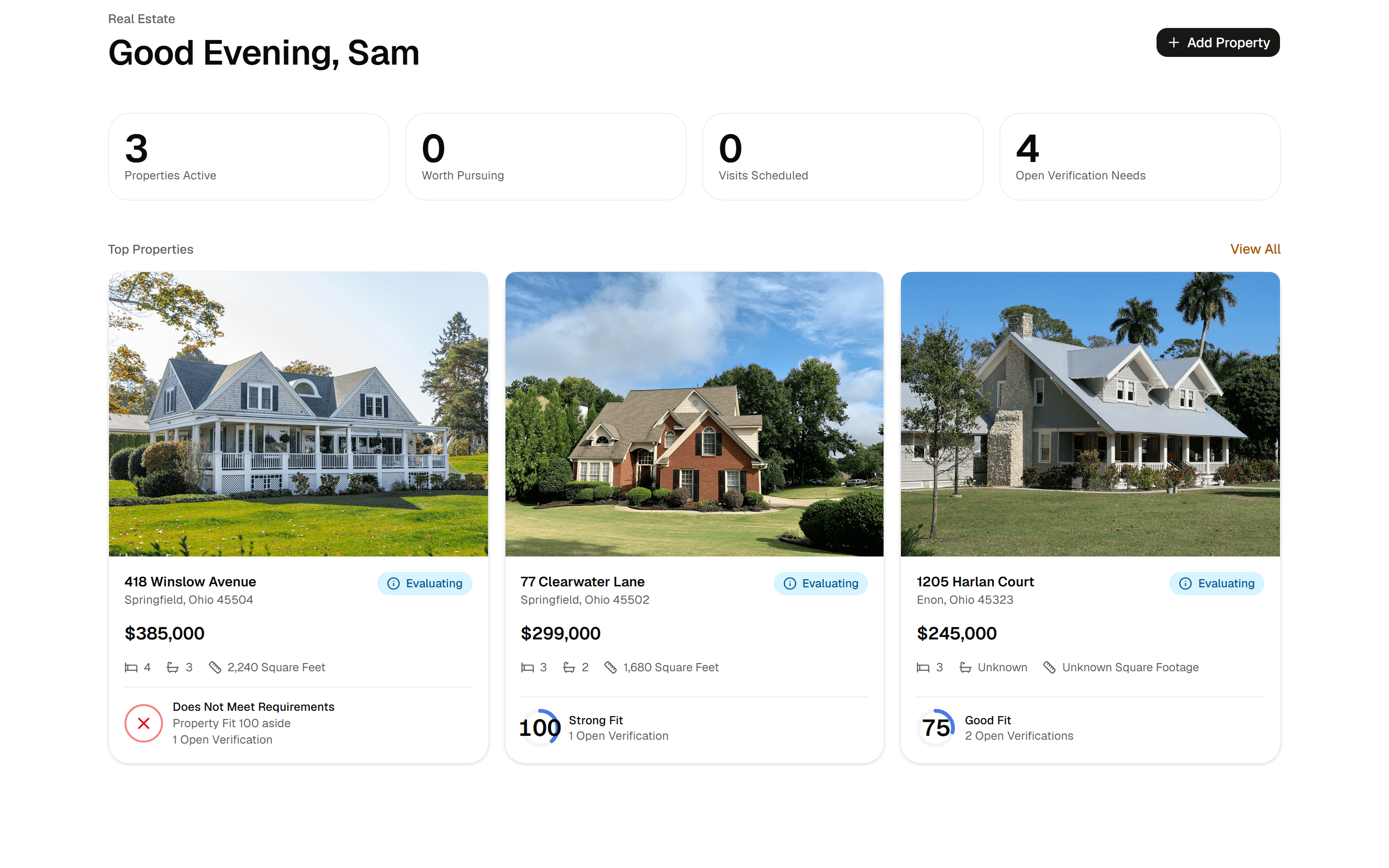
Turn a Property Shortlist Into a Decision.

Who acquires it
A proptech operator, a brokerage with technical capacity and lawful data access, or a technical founder.
What its users get
A buyer leaves a viewing with the unknowns that mattered answered, and the property's record updated with what they actually saw.
Asking price
Price on Request
Availability
Available
Schema
16 tables
Recorded tests
136 passing

Travel Intelligence

Family Travel

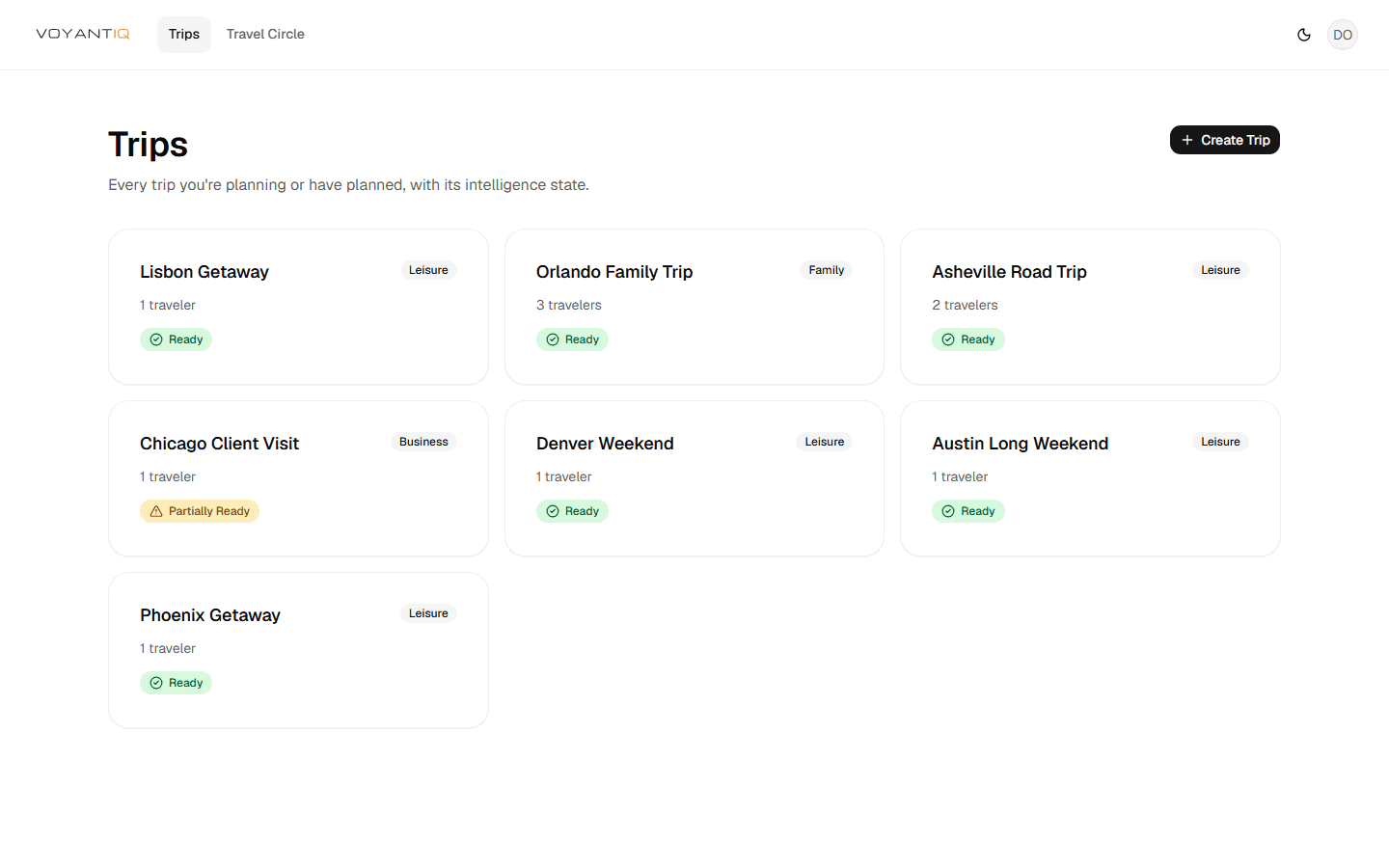
A Family Trip, With Everyone's Constraints in View.

Who acquires it
A travel-product founder, or an existing agency or operator with technical capacity.
What its users get
A household can see which recommendation loses, on whose constraint, and why — before anybody commits to anything.
Asking price
Price on Request
Availability
Available
Schema
47 tables
Recorded tests
479 passing, 1 skipped

Group and Business Travel

Teams

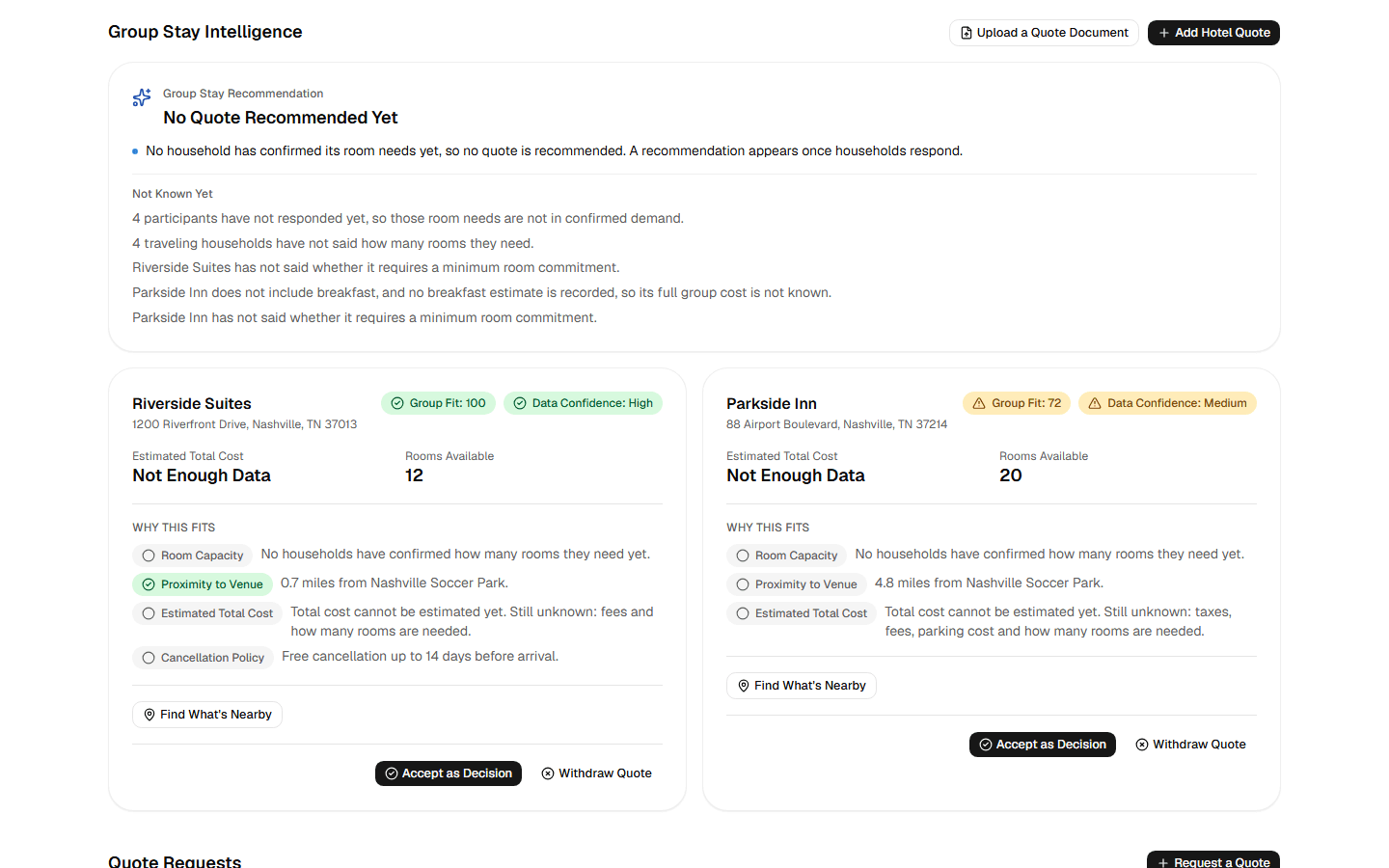
Group Travel Decisions Beyond the Nightly Rate.

Who acquires it
A group or sports travel operator, an organization that travels, or a vertical software company.
What its users get
A coordinator can say which quote is genuinely best for the households that are actually travelling, and show the working a season later.
Asking price
Price on Request
Availability
Available
Schema
62 tables
Recorded tests
373 passing

Which one is yours.

What separates them is not quality. It is who you intend to sell to, which workflows arrive finished, and how much you have to stand up yourself before anybody can use it.

The four applications compared on intended market, included workflows and setup dependencies.
ApplicationIntended marketIncluded workflowsYou supply
Mission ControlPrice on Request · AvailableFounders and small software operators
  • Company Health across eleven dimensions
  • Service inventory with manually recorded costs and renewals
  • Decisions Needed, derived from evidence
  • An append-only decision log
  • Hosting and a PostgreSQL database
  • A GitHub token and a configured repository
  • A hosting-provider token for deployment evidence
  • Email delivery, which the application does not include
Real EstatePrice on Request · AvailableProptech operators and brokerages with a developer
  • Requirements, then eligibility and fit scored separately
  • Verification needs derived from what is missing
  • Visit briefs built from those needs
  • Findings that refresh the property record
  • Hosting, a PostgreSQL database and file storage
  • A property data source, or manual entry
  • Model provider credentials for the question panel
  • Email delivery and account recovery, neither included
Family TravelPrice on Request · AvailableTravel-product founders, agencies and operators
  • Household profiles and explicit preferences
  • Constraint-based candidate evaluation with explanations
  • Whole-trip package assembly against a budget
  • Decision records, export and a booking handoff
  • Hosting and a PostgreSQL database
  • Model provider credentials and their usage costs
  • Travel provider accounts, each with its own rights and fees
  • Everything a booking business needs, none of which is here
TeamsPrice on Request · AvailableGroup travel operators and organizations that travel
  • Groups and Teams: rosters, events, travelling households, hotel quotes
  • Business Travel: objectives, commitments, policy, approvals, receipts
  • Group Fit and quote economics kept apart
  • An institutional decision and audit record
  • Hosting, a PostgreSQL database and file storage
  • Email delivery, which the standalone repository has not demonstrated
  • A hosted model provider for document extraction
  • A phone layout fix before any parent-facing demonstration

Schema and test counts were measured on 30 October 2026 against the packaged repositories, and a skipped test is never counted as a passing one. Both are re-run against the actual sale commit before a transfer.

Buying one means receiving all of it.

An application you cannot run without the people who sold it to you is not an asset. Every handover is the same four things, and a transfer check runs against a clean clone before any of it changes hands.

Full source
The repository, with its commit history, not a snapshot export.
Schema and migrations
PostgreSQL, migrated from empty on a database you provision.
Ten documents
Architecture, data model, operations, environment, known limits and the rest.
An evidence pack
Licence inventory, bill of materials, secret scan and dependency advisories.

How an acquisition goes.

Six steps, in this order. A request starts a conversation and reserves nothing. Payment and completed transfer are two separate events. The handover has an end date written into it.

  1. You inspect the application

    The detail page says what the delivered version demonstrates, what you configure, what needs a licence we do not hold, and what is simply not there. Where a demonstration exists it is linked, and it names the version it represents.

  2. You request the acquisition

    A short form: who you are, what you would do with it, and who would set it up. It is a request for a conversation. It is not a reservation, it holds nothing, and it commits neither of us to anything.

  3. We send the current evidence and the transfer scope

    The evidence pack with its commit and its verification date, the known limits, the dependency position, and a written scope of exactly what transfers and what VoyantIQ retains. You read all of it before money is discussed, not after.

  4. We agree terms

    The asking price is published; an acquisition still ends in an agreement that names the delivered version, the acceptance process, the remedy for an unresolved defect, and the exact scope of exclusivity. Nothing here has been approved by counsel, and contract drafts are not finished.

  5. You pay, and then the application is transferred

    These are two events, not one. Payment being recorded is not the transfer, and the transfer is not complete until the repository, schema, migrations, configuration and documentation are in your hands and the application comes up from a clean clone on a database you provisioned.

  6. A bounded handover, and then it is yours

    Up to two one-hour sessions within thirty calendar days of delivery, and thirty calendar days to report reproducible defects against the agreed delivered version. After that the relationship ends unless you want a separate one.